Desk Worker Movement Framework

Your Workday
Movement System

Structured micro-movement programs designed for people who work at a desk. Short, purposeful routines that fit into your schedule — no gym, no equipment, no disruption.

60 min Reminder intervals
1–3 min Per routine
6 zones Body areas covered

How the system works

A structured approach to integrating movement into your existing work schedule — no routine changes required.

01

Set your schedule

Define your working hours and preferred break frequency. Plan movement windows around your existing calendar without interfering with focus time.

02

Select your zones

Choose the body areas that need attention — neck, shoulders, wrists, lower back, hips, or legs. Each zone has its own dedicated micro-routine library.

03

Follow the cues

Use suggested break times at intervals you choose. Each routine takes 1–3 minutes and can be done at your desk, standing, or in a small space.

Desk-friendly movement modules

Compact, purposeful routines organized by duration and body focus. Each module is designed for a standard office environment.

Hand & Wrist Reset

Circulation and tension-release sequences for people who type extensively throughout the day.

2 min Desk only

Neck & Shoulder Release

Gentle mobility sequences for the upper body — targeting areas that accumulate tension from screen work.

3 min Standing

Seated Posture Reset

Chair-based alignment cues and micro-adjustments to maintain neutral spine position during long sitting periods.

1 min Seated

Eye & Focus Reset

Structured visual breaks following the 20-20-20 principle — may help ease eye discomfort during continuous computer use.

1 min Any position

Lower Back & Hip Flow

Standing and seated movements for the lumbar region and hip flexors — commonly compressed during extended desk sessions.

3 min Standing

Breathing & Reset

Short structured breathing patterns that some people use for a brief mental reset between work blocks.

2 min Any position

Workday energy timeline

A structured view of when different movement types are most useful throughout a standard 8-hour workday.

08:00 – 09:00
Morning preparation Gentle joint preparation and posture calibration before the first focus block begins
Warm-up
09:00 – 10:30
First focus block Deep work period — micro eye-break reminders activate; no disruptive routines
Focus
10:30
Break 1 — Upper body reset Wrist, shoulder, and neck mobility sequence — 2 minutes at desk
Movement
12:00 – 13:00
Midday transition Longer movement window — lower body and hip sequences most effective here
Peak break
14:30
Break 2 — Energy reset Breathing sequence and posture reset — a suggested mid-afternoon break routine
Movement
16:30
End-of-day wind-down Gentle release sequences — prepare the body for transition out of work posture
Close-out

Quick-access stretch library

Browse routines by body zone. Each category contains multiple exercises scaled for different durations and positions.

Hands & Wrists
8 exercises
Neck & Shoulders
10 exercises
Back & Spine
9 exercises
Hips & Legs
7 exercises
Eyes & Focus
5 exercises
Breathing
6 patterns
Mental reset
4 techniques
Seated habits
12 practices

Ergonomic reset guide

Practical desk setup principles and seated alignment cues for maintaining a neutral posture throughout the day.
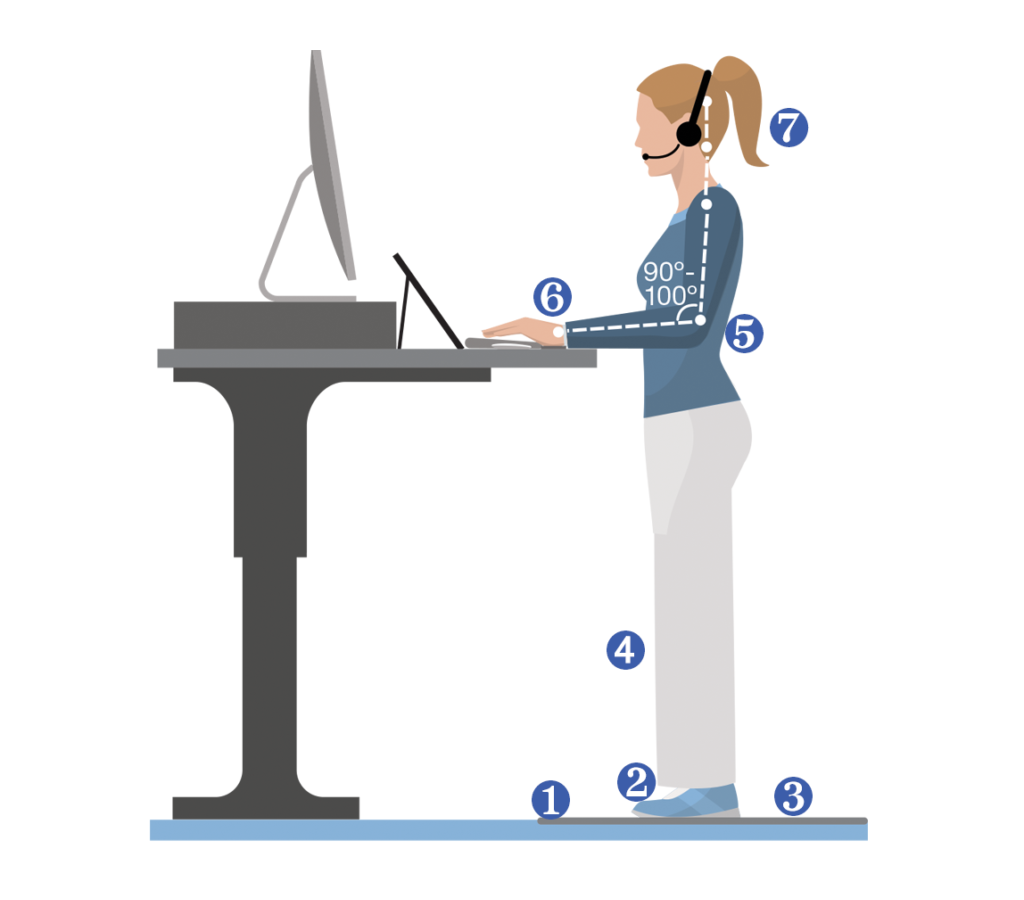
Screen at eye level
Position the top of your monitor at or just below natural eye level to reduce neck flexion.
90-90-90 seated position
Hips, knees, and ankles each at approximately 90 degrees with feet flat on the floor.
Keyboard alignment
Wrists neutral and elbows close to the body. Avoid sustained wrist extension during typing.
Lumbar support active
Keep the natural curve of your lower back supported — adjust chair lumbar or use a support cushion.
A well-organized ergonomic workstation showing proper monitor height, keyboard placement, and chair positioning for desk workers
Ergonomic desk setup reference
Apply these principles to your existing workspace

Productivity & movement balance

An illustrative reference model — example metrics only, not personal tracking data.

72 / 100
Example movement balance
Illustrative sample only — not based on your personal activity or tracking data.
Seated time ratio 78%
Movement break consistency 65%
Upper body zone coverage 80%
Lower body zone coverage 40%
Breathing & mental reset 55%

Workday energy micro-routines

Short structured sequences timed to specific points in the workday when attention and physical tension typically accumulate.

Mid-morning reset
90 min after start
Neck lateral stretch — 30 sec each side
Shoulder rolls — 10 forward, 10 backward
Wrist extension and flexion — 30 sec
Eye focus shift — 20 sec distant gaze
Midday transition
Before lunch break
Standing hip flexor stretch — 45 sec each
Thoracic extension over chair — 30 sec
Calf raises — 20 repetitions
Diaphragmatic breath — 5 slow cycles
Afternoon energy reset
2.5 hrs after lunch
Seated spinal rotation — 30 sec each side
Finger and hand spread — 10 repetitions
Box breathing — 4 full cycles
Standing desk transition — 10 min window

Get in touch

Questions about the programs or need guidance on adapting routines to your work setup? Send us a message.

Contact us